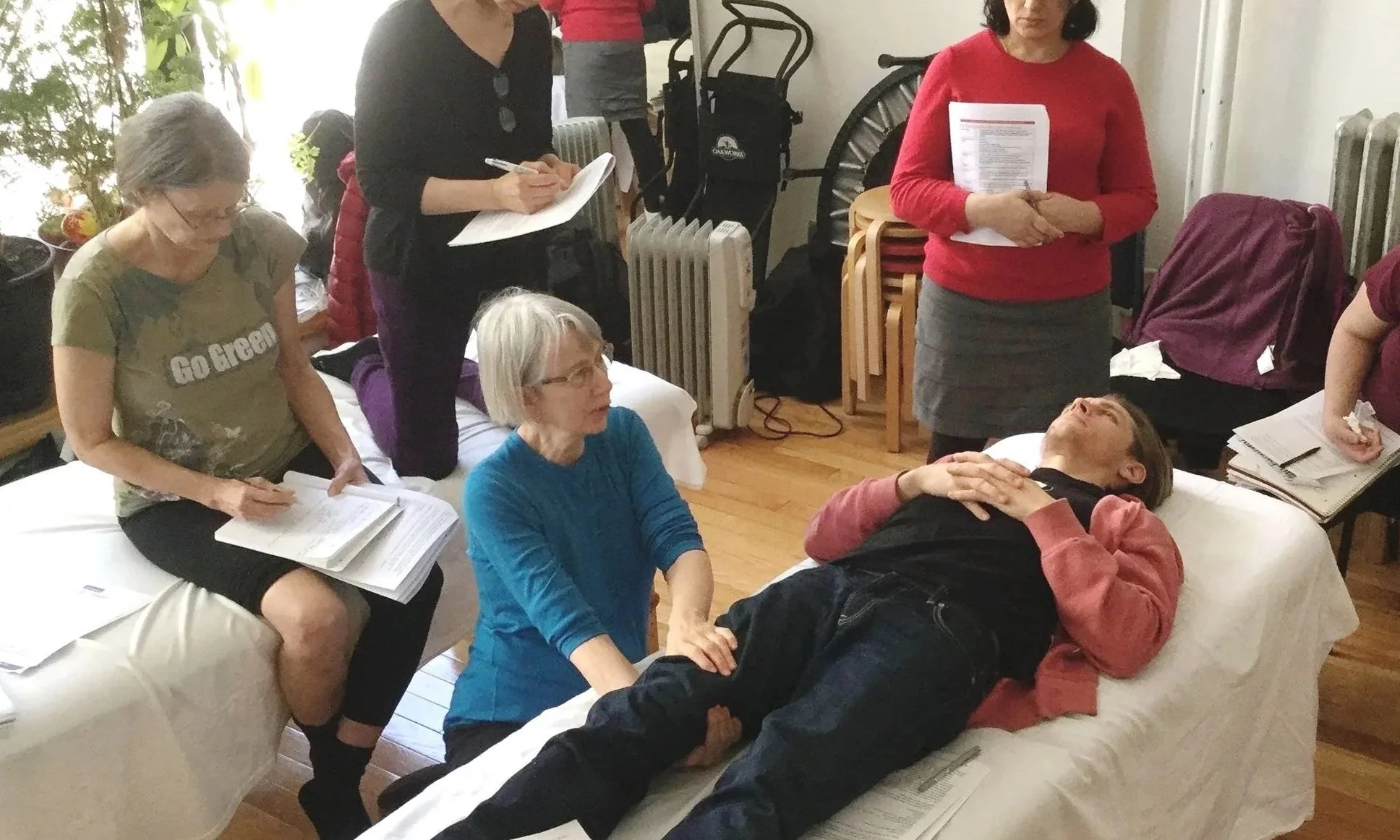
Free Lecture on Ortho-Bionomy® in Madison, WI
Free Ortho-Bionomy® introductory lecture and demonstration with Morel Stackhouse Advanced Instructor of Ortho-Bionomy.
"Morel is the foundation of the New York City Ortho-Bionomy® community. She has consistently been generous with us with her time, energy, and expertise since she first came to teach a class in 1995. Her clarity and attention to detail in this work is unparalleled. We think that her influence is what has helped us to create our “NYC style”. We have grown together over the decades in a synergistic relationship for everyone’s benefit. Morel holds a high standard, has been willing to up her game, been supportive of our individual explorations, which in turn has motivated us to be our best."
- Rosa M. Rodriguez, LMT, MFA, Registered Advanced Instructor of Ortho-Bionomy®
Whether by fate, mission, or design, Morel Stackhouse is the catalyst, the Mother if you will, of the New York Ortho-Bionomy Community. She was the first Instructor to realize its untapped potential, nurture it, bind it together and bring the right resources and people to it. She kept coming to us sharing her knowledge, wisdom, and example, long before we realized we were a community and long before it was profitable to do so. She has been Teacher, Mentor, Advisor, Cheerleader, and Friend to us all and my life has been enriched in more ways than I can measure because of having taken my first Ortho-Bionomy class with her and having her as a role model as Practitioner and Instructor of Ortho- Bionomy.
- Gary Lee Williams, LMT, Registered Instructor of Ortho-Bionomy®
Free Ortho-Bionomy® introductory lecture and demonstration with Morel Stackhouse Advanced Instructor of Ortho-Bionomy.
This course covers the history, philosophy and basic concepts of Ortho-Bionomy. In this class you will observe and practice specific techniques for releasing imbalances in the neck, thoracic spine and ribcage, lumbar spine, pelvic girdle and sacrum. These techniques result in the release of pain and neuromuscular tension patterns, promoting expanded range of motion, increased circulation and a greater sense of well-being.
This class is designed to help participants access and track sensation and energetic perception in themselves and in their clients, and to learn how to make contact without necessarily engaging physically. Techniques will be presented that monitor and acknowledge the inter-relationship between energetic, emotional and physical levels and that demonstrate how energetic shifts can affect changes in physical patterns.
The Vagus nerve plays a crucial role in the autonomic nervous system, carrying both sensory and motor fibers and serving as a major pathway that connects the brain to various organs, including the heart, lungs, and digestive tract. As a key part of the parasympathetic nervous system, the vagus nerve helps regulate essential involuntary functions like heart rate, breathing, and digestion. It contributes to the body's "rest and digest" response, helping to calm the body after stress, lower heart rate, improve digestion, and maintain homeostasis. The Phrenic nerve is a mixed motor/sensory nerve that courses through the neck and thorax to innervate the diaphragm.
This class will cover the basic anatomy/physiology and wide reaching effects of these nerves. Participants will learn how to recognize signs of disturbance in either system and how to address these nerves in a simple, gentle, and respectful way. Self care for the vagus nerve will be demonstrated and practiced.
The focus of Phase Five is to move to a more subtle level of awareness of the practice and principle of Ortho-Bionomy. Specific techniques develop and increase the student's understanding and proprioceptive sensitivity to the self-corrective movements initiated by the client. Through the practice of observing, following and supporting subtle movement patterns, muscular tension is released, range of motion is increased and pain is reduced. In Phase Five, students are encouraged to do less and let the client be the guide for his/her exploration of change.
This class with Morel Stackhouse, Registered Advanced Instructor, expands and builds upon Ortho-Bionomy® Fundamentals for the Extremities. In this class you will observe and practice specific techniques for releasing imbalances of the shoulder girdle, arm, elbow, wrist and hand.. Detailed releases for the soft tissue as well as the joints will be covered.These techniques result in the release of pain and neuromuscular tension patterns, promoting expanded range of motion, increased circulation and a greater sense of well-being.
Ortho-Bionomy® Phase Four In-Depth Spine is a continuation of Ortho‐Bionomy Fundamentals: Spine & Pelvis. In this class you will observe and practice specific techniques for releasing imbalances of the pubic bone, coccyx, hemi pelvis, femoral/coxal joint, facet joints, and muscles of the back and pelvis. You will also learn techniques for working with the spines of people with scoliosis and people who have undergone spinal fusions. These techniques result in the release of pain and neuromuscular tension patterns and promote an expanded range of motion, increased circulation and a greater sense of well being.
This course covers the history, philosophy and basic concepts of Ortho-Bionomy. In this class you will observe and practice specific techniques for releasing imbalances in the neck, thoracic spine and ribcage, lumbar spine, pelvic girdle and sacrum. These techniques result in the release of pain and neuromuscular tension patterns, promoting expanded range of motion, increased circulation and a greater sense of well-being.
Ortho-Bionomy: Exploration of Movement Patternsadds depth and dimension to Phase Four Ortho-Bionomy, moving it from technique to art. In this class you will learn to observe and explore various patterns of movement throughout the body in skin, fascia, muscle, connective tissue, bone, nerves, and fluid. We will use movement as both a means of assessment and as a release technique. Bodies are designed to move - releasing them through the application of movement deepens the connection between form and function, integrates the releases with the rest of the system, and gives the body a deeply-felt experience of itself. These techniques form an excellent bridge from the physical to the energetic work of Ortho-Bionomy.
Ortho-Bionomy Fundamentals: Extremities covers the history, philosophy and basic concepts of Ortho-Bionomy. In this class you will observe and practice specific techniques for releasing imbalances of the shoulder girdle, arm, elbow, wrist and hand; hip, leg, knee, ankle and foot. These techniques result in the release of pain and neuromuscular tension patterns, promoting expanded range of motion, increased circulation and a greater sense of well-being.
In this workshop, you will learn Ortho-Bionomy-based partner isometrics for the upper extremities. We will work with our shoulders, arms, elbows, wrists, hands and fingers. These exercises can be done standing, sitting or lying down — no special equipment is needed besides a chair. Please wear non-restrictive clothing and layers for your comfort. This workshop is for everyone but was created especially for friends of Madison Circus Space. You can come with a partner or solo, as we’ll have many chances to practice with each other!
This course covers the history, philosophy and basic concepts of Ortho-Bionomy. In this class you will observe and practice specific techniques for releasing imbalances in the neck, thoracic spine and ribcage, lumbar spine, pelvic girdle and sacrum. These techniques result in the release of pain and neuromuscular tension patterns, promoting expanded range of motion, increased circulation and a greater sense of well-being.
This class with Morel Stackhouse, Registered Advanced Instructor, expands and builds upon Ortho-Bionomy® Fundamentals for the Extremities. In this class you will observe and practice specific techniques for releasing imbalances of the shoulder girdle, arm, elbow, wrist and hand.. Detailed releases for the soft tissue as well as the joints will be covered.These techniques result in the release of pain and neuromuscular tension patterns, promoting expanded range of motion, increased circulation and a greater sense of well-being.
This class with Morel Stackhouse, Registered Advanced Instructor, expands and builds upon Ortho-Bionomy® Fundamentals for the Extremities. In this class you will observe and practice specific techniques for releasing imbalances of the hip, leg, knee, ankle and foot. Detailed releases for the soft tissue as well as the joints will be covered.These techniques result in the release of pain and neuromuscular tension patterns, promoting expanded range of motion, increased circulation and a greater sense of well-being.
This course covers the history, philosophy and basic concepts of Ortho-Bionomy. In this class you will observe and practice specific techniques for releasing imbalances in the neck, thoracic spine and ribcage, lumbar spine, pelvic girdle and sacrum. These techniques result in the release of pain and neuromuscular tension patterns, promoting expanded range of motion, increased circulation and a greater sense of well-being.
Free Ortho-Bionomy® introductory lecture and demonstration with Morel Stackhouse Advanced Instructor of Ortho-Bionomy.
In this study group, Morel will work with 4-5 individuals who have received knee replacement surgery, narrating her process, while participants observe. Time will be allotted for Q & A.
In this study group, Morel will work with 4-5 individuals who have scar issues, narrating her process, while participants observe. Time will be allotted for Q & A.
In this class, you will learn ways to assist your clients who are having, or who have had knee replacement surgery. Topics will include an overview of the knee replacement surgical process, preoperative care, i.e., the important areas to work with the day/night prior to surgery, postoperative care, i.e., the day of surgery and beyond, and complimentary medicine for healing. This class will also include ways to work with common postoperative issues such as difficulty with knee flexion and extension, fear/trauma, incision care, swelling, and pain. We will draw from Phase Four, Phase Five, Phase Six, Isometrics, Chapmans Reflexes and Exploration of Movement approaches.
Ortho-Bionomy Fundamentals: Extremities covers the history, philosophy and basic concepts of Ortho-Bionomy. In this class you will observe and practice specific techniques for releasing imbalances of the shoulder girdle, arm, elbow, wrist and hand; hip, leg, knee, ankle and foot. These techniques result in the release of pain and neuromuscular tension patterns, promoting expanded range of motion, increased circulation and a greater sense of well-being.
In this class we will explore the experience of surgery and medical procedures and how they can impact our clients. Participants will learn ways to support their clients prior to, and following a medical procedure/surgery. Approaches for release and integration of scar tissue and adhesions, how to work with fractured bones in various stages of healing, and implanted hardware or prosthesis will be learned.
Ethics and Emotional Issues will be covered within the context of The Biological Model of Trauma: how trauma affects people, and how practitioners of therapeutic bodywork can most effectively work with individuals who are traumatized in a way that supports their healing process.
Free Ortho-Bionomy® introductory lecture and demonstration with Morel Stackhouse and Lynne Marotta, Advanced Instructors of Ortho-Bionomy.
This course covers the history, philosophy and basic concepts of Ortho-Bionomy. In this class you will observe and practice specific techniques for releasing imbalances in the neck, thoracic spine and ribcage, lumbar spine, pelvic girdle and sacrum. These techniques result in the release of pain and neuromuscular tension patterns, promoting expanded range of motion, increased circulation and a greater sense of well-being.
In this class you will learn how Ortho-Bionomy® can facilitate the natural ability of the lymphatic system to function well. The focus will be on understanding the nature of the lymphatic system and its relationship to the fascia and the fluids.
This class is designed to help participants access and track sensation and energetic perception in themselves and in their clients, and to learn how to make contact without necessarily engaging physically. Techniques will be presented that monitor and acknowledge the inter-relationship between energetic, emotional and physical levels and that demonstrate how energetic shifts can affect changes in physical patterns.
This 3-hour class will review the Biological Model of Trauma, how trauma affects people, and how practitioners of therapeutic bodywork can most effectively work with individuals who are affected by trauma. Participants will learn about the neurological basis of trauma in the autonomic nervous system and how to recognize signs of trauma in their clients. We will explore Trauma Resourcing in depth: specific verbal and energetic approaches as well as bodywork techniques for working with trauma-based dysfunction in the body. Participants will have the opportunity to practice in class.
This 3-hour class will cover ethical considerations such as roles and boundaries, power differentials, and dual relationships. Participants will learn skills for addressing emotional responses that may arise during a session in an appropriate and professional manner. In addition we will discuss guidelines for professional conduct and review the Society of Ortho-Bionomy International's Code of Ethics.
The focus of Phase Five is to move to a more subtle level of awareness of the practice and principle of Ortho-Bionomy. Specific techniques develop and increase the student's understanding and proprioceptive sensitivity to the self-corrective movements initiated by the client. Through the practice of observing, following and supporting subtle movement patterns, muscular tension is released, range of motion is increased and pain is reduced. In Phase Five, students are encouraged to do less and let the client be the guide for his/her exploration of change.
Copyright © Morel Stackhouse 2018 onward.
Ortho-Bionomy® is a registered trademark of the Society of Ortho-Bionomy International, Inc. and is used with permission.
Society of Ortho-Bionomy International® is a registered trademark that indicates membership in the Society, and it is used with permission.
This site is maintained ♥ with love.